
THE UNIVERSITY WITS
The University Wits were a group of late 16th-century English playwrights and poets educated at the universities of Oxford and Cambridge, and contributed significantly to the development of Elizabethan drama. Their work marked a transitional phase in English literature, bridging the gap between the early forms of English drama and the more sophisticated, mature works of the Renaissance. The Wits were known for their inventive use of language, dramatic structure, and bold themes, and they laid the groundwork for the greatest playwright, William Shakespeare.
Who Were the University Wits?
The University Wits included a small but influential circle of writers who, though never formally organized as a group, shared similar backgrounds, aspirations, and dramatic goals. The core members of the group are:
- Christopher Marlowe (1564–1593)
- Thomas Kyd (1558–1594)
- Robert Greene (1558–1592)
- George Peele (1556–1596)
- Thomas Nashe (1567–1601)
- Thomas Lodge (1558–1625)
- John Lyly (1554–1606)
Although these playwrights came from various backgrounds, their university education distinguished them from the common playwrights of their time, giving them the collective title of “University Wits.”
Characteristics of Their Work:
The University Wits are noted for bringing innovation and refinement to English drama. Their works had the following distinctive features:
- Sophisticated Use of Language:
- They employed elaborate rhetoric and classical references, showcasing their education and mastery of language.
- Their plays were characterized by lyrical quality, poetic grandeur, and imaginative expressions.
- Elevated Themes and Subjects:
- The University Wits focused on heroic themes and characters, portraying great figures like kings, soldiers, and tragic heroes.
- Their plays often dealt with issues of power, ambition, human conflict, and the complexities of the human psyche.
- Complex Plots and Well-Defined Characters:
- Unlike the earlier medieval plays, which were episodic and simplistic, their dramas featured complex narratives and well-rounded characters.
- They introduced the concept of psychological depth, especially in the portrayal of protagonists who face inner turmoil and moral dilemmas.
- Tragic Spirit and Violence:
- Their works often had a tragic tone, with characters undergoing intense suffering or facing dramatic downfalls.
- Physical violence and supernatural elements were frequently used to heighten dramatic tension and spectacle.
- Innovative Dramatic Structure:
- The University Wits experimented with new forms and styles of drama, refining the blank verse (unrhymed iambic pentameter), which became a hallmark of Elizabethan tragedy.
- They moved away from the episodic style of medieval plays and adopted a more unified and organized structure.
Key Members and Their Contributions:
-
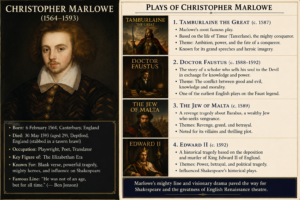
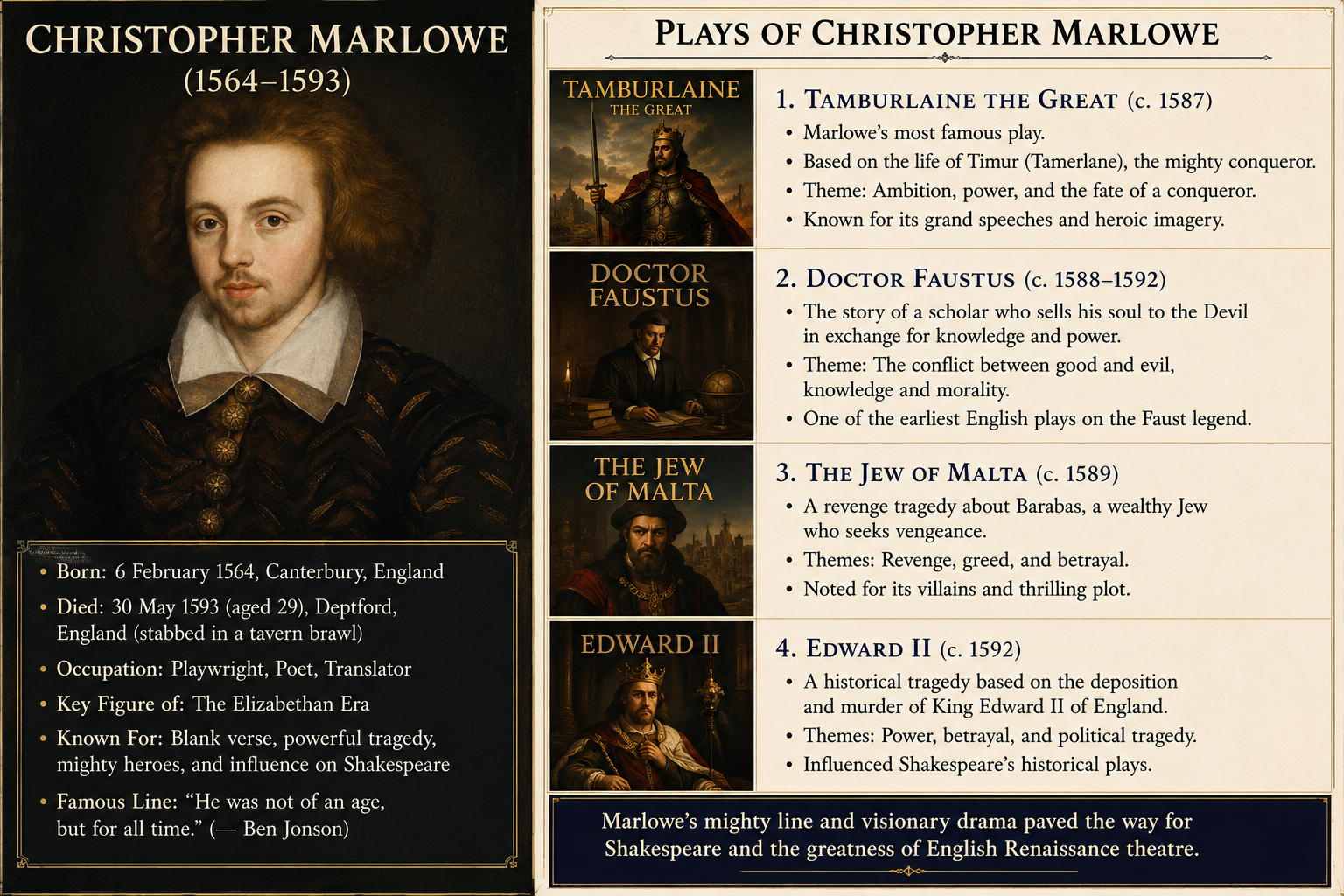
Christopher Marlowe Christopher Marlowe:
- Marlowe was the most celebrated member of the University Wits and arguably their greatest playwright. His blank verse was revolutionary, paving the way for Shakespeare and others.
- Major Works: Tamburlaine the Great, Doctor Faustus, The Jew of Malta, Edward II.
- Contribution:
- Marlowe introduced the “Marlovian hero,” a figure characterized by immense ambition, intellectual prowess, and a tragic flaw that leads to his downfall.
- His use of blank verse elevated English drama and allowed for a greater range of expression and psychological complexity.
- Thomas Kyd:
- Kyd’s contribution was significant, especially in establishing the revenge tragedy genre, which later influenced Shakespeare’s Hamlet.
- Major Work: The Spanish Tragedy.
- Contribution:
- His play The Spanish Tragedy introduced themes of revenge, madness, and supernatural intervention, setting the template for future revenge tragedies.
- Robert Greene:
- Greene was a versatile writer known for his romantic comedies and prose pamphlets. He also wrote critical works on contemporary playwrights.
- Major Works: Friar Bacon and Friar Bungay, The Scottish History of James IV.
- Contribution:
- Greene’s comedies were known for their use of folklore and supernatural elements, often blending pastoral themes with urban intrigue.
- George Peele:
- Peele was known for his lyrical and imaginative use of language. His plays often blended classical and contemporary elements.
- Major Works: The Arraignment of Paris, The Battle of Alcazar.
- Contribution:
- His plays often had elaborate pageantry and spectacle, and he is credited with helping shape the genre of the Elizabethan history play.
-
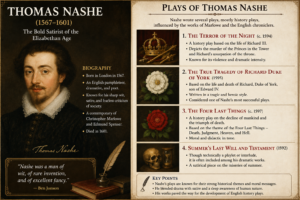
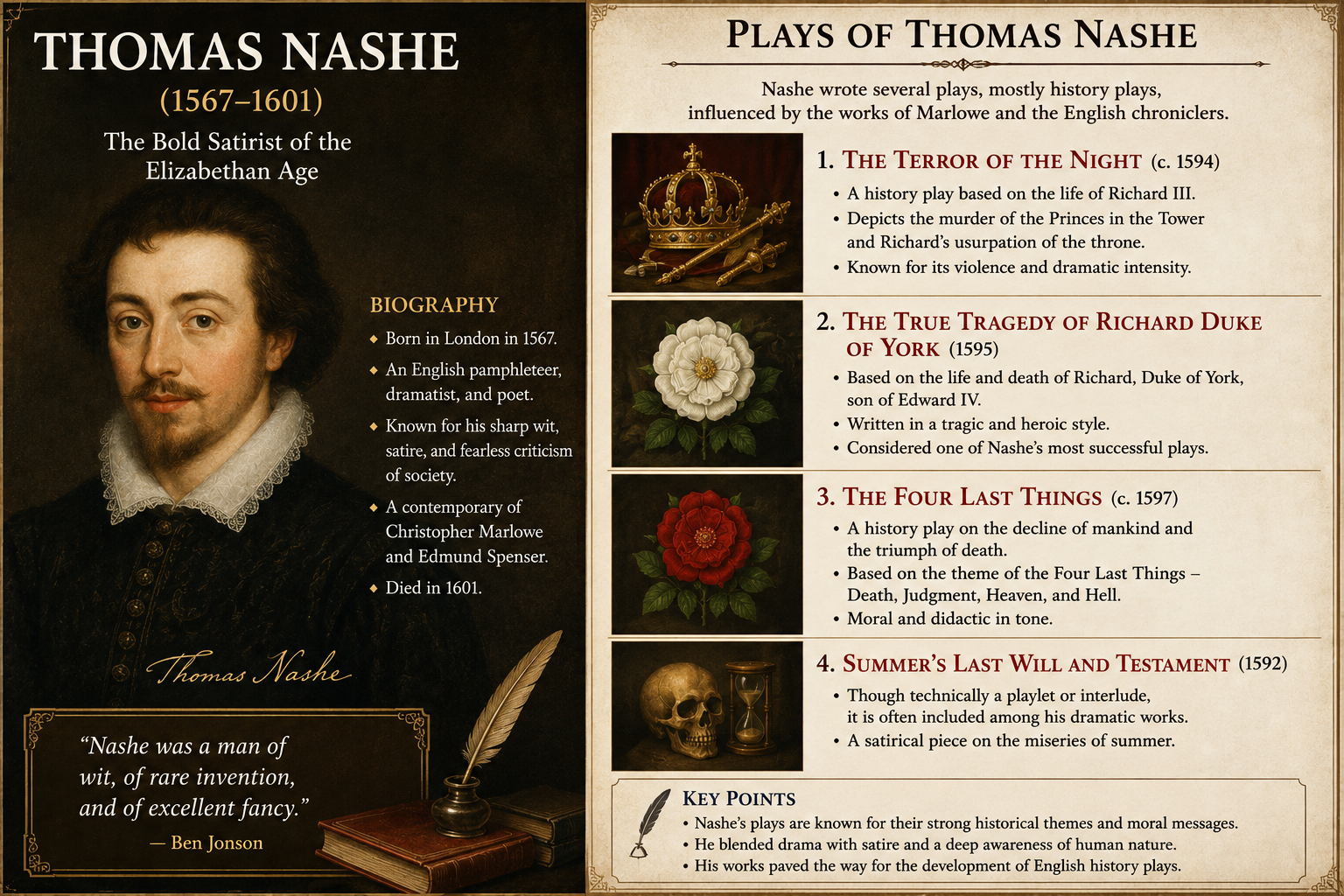
Thomas Nashe Thomas Nashe:
- Primarily a satirist and pamphleteer, Nashe also dabbled in drama and collaborated with other playwrights.
- Major Works: Summer’s Last Will and Testament, The Isle of Dogs (written with Ben Jonson).
- Contribution:
- Nashe’s works were known for their sharp wit, social commentary, and playful use of language.
- Thomas Lodge:
- Lodge was a writer of both prose and drama, known for his romantic comedies.
- Major Works: The Wounds of Civil War, Rosalynde (the source material for Shakespeare’s As You Like It).
- Contribution:
- Lodge’s comedies were marked by a blending of tragic and comic elements, foreshadowing the Romantic comedy genre.
- John Lyly:
- Lyly was famous for his courtly comedies and refined prose style known as Euphuism.
- Major Works: Endymion, Campaspe, Gallathea.
- Contribution:
- He wrote primarily for the children’s companies and focused on themes of love, myth, and allegory, contributing to the development of the Elizabethan romantic comedy.
Significance of the University Wits:
The University Wits were instrumental in transforming English drama into a sophisticated literary form. They laid the foundation for the flourishing of Elizabethan theatre and paved the way for Shakespeare’s dramatic genius. Their contributions include:
- Introduction of Blank Verse:
- Marlowe’s use of blank verse transformed English drama, allowing for more nuanced and rhythmic dialogue.
- Development of Complex Characters:
- They moved away from the stock characters of medieval drama, creating multi-dimensional protagonists and antagonists.
- Merging Classical and English Elements:
- The Wits blended classical themes, structures, and styles with distinctly English stories and concerns, giving English drama its unique identity.
- Legacy in Shakespearean Drama:
- Shakespeare built on the innovations of the University Wits, perfecting their techniques and creating a dramatic form that surpassed their own.
In conclusion, the University Wits were a dynamic and talented group of playwrights who revolutionized English drama through their innovative use of language, structure, and themes. Their contributions were crucial in elevating English drama from its medieval roots to the heights of Elizabethan theatre.
Read More:
Pre-Chaucerian Era – STUDY ENGLISH LITERATURE
Importance and Differences between Mystery, Miracle, and Morality Plays – STUDY ENGLISH LITERATURE
Follow on You Tube:
On His Blindness by John Milton. Explanation in Hindi and analysis of the poem with important MCQs.