
R.K. Narayan’s Under the Banyan Tree – Summary
About the Author – R K Narayan

R.K. Narayan (1906–2001) is one of the most celebrated Indian writers in English. R K Narayan’s Under the Banyan Tree is one of his best-known works. He is best known for creating the fictional South Indian town of Malgudi, which serves as the setting for many of his novels and short stories. Narayan’s writing is admired for its simplicity, gentle humour, realistic characters, and deep understanding of human nature.
R.K. Narayan’s Under the Banyan Tree – Summary
Under the Banyan Tree is a philosophical short story about Nambi, an old and respected storyteller who lives in a village. Every evening, villagers gather under a large banyan tree to listen to his fascinating stories. They believe that his storytelling talent is a divine gift from the village goddess.
Nambi never considers storytelling to be his personal achievement. Before narrating each story, he prays to the goddess for inspiration. According to him, every story comes directly from her blessings.
As the years pass, Nambi grows old. One day, when he sits beneath the banyan tree to tell a new story, he finds that no story comes to his mind despite sincere prayer. He waits patiently, believing that the goddess will inspire him, but inspiration never arrives.
Instead of inventing a story or pretending to have divine inspiration, Nambi honestly tells the villagers that the goddess has withdrawn her gift and that he can no longer tell stories. The villagers are disappointed but deeply respect his honesty and humility.
Nambi accepts this change peacefully. He spends the rest of his life in silence and devotion, demonstrating that true wisdom lies in accepting life’s changes with dignity.
The story explores the relationship between creativity, faith, humility, and the inevitability of old age.
Main Characters in R.K. Narayan – Under the Banyan Tree
1. Nambi (Protagonist)
- An elderly village storyteller.
- Wise, humble, honest, and deeply religious.
- Believes storytelling is a divine gift rather than a personal talent.
- Accepts the loss of his creativity with grace and dignity.
2. The Villagers
- Faithful listeners who admire and respect Nambi.
- Gather daily beneath the banyan tree to hear his stories.
- Symbolize a traditional community that values oral storytelling.
3. The Village Goddess
- Never appears directly in the story.
- Represents divine inspiration and creativity.
- Symbolizes faith and spiritual guidance.
Themes
1. Divine Inspiration
The story suggests that creativity may be viewed as a gift rather than something entirely owned by the artist.
2. Acceptance of Change
Nambi calmly accepts the end of his storytelling ability instead of resisting reality.
3. Humility
Despite his fame, Nambi never claims credit for his talent.
4. Faith and Spirituality
His unwavering belief in the goddess shapes both his storytelling and his response to losing inspiration.
5. Aging and Mortality
The story reflects the natural decline that accompanies old age and the wisdom required to accept it.
6. Art and Creativity
Narayan explores the mysterious nature of artistic inspiration and the responsibility to remain truthful.
Style of R.K. Narayan’s Under the Banyan Tree
1. Simple and Lucid Language
Narayan uses clear, natural language that is easy to understand yet emotionally powerful.
2. Realism
The village setting, ordinary people, and everyday life are portrayed realistically.
3. Symbolism
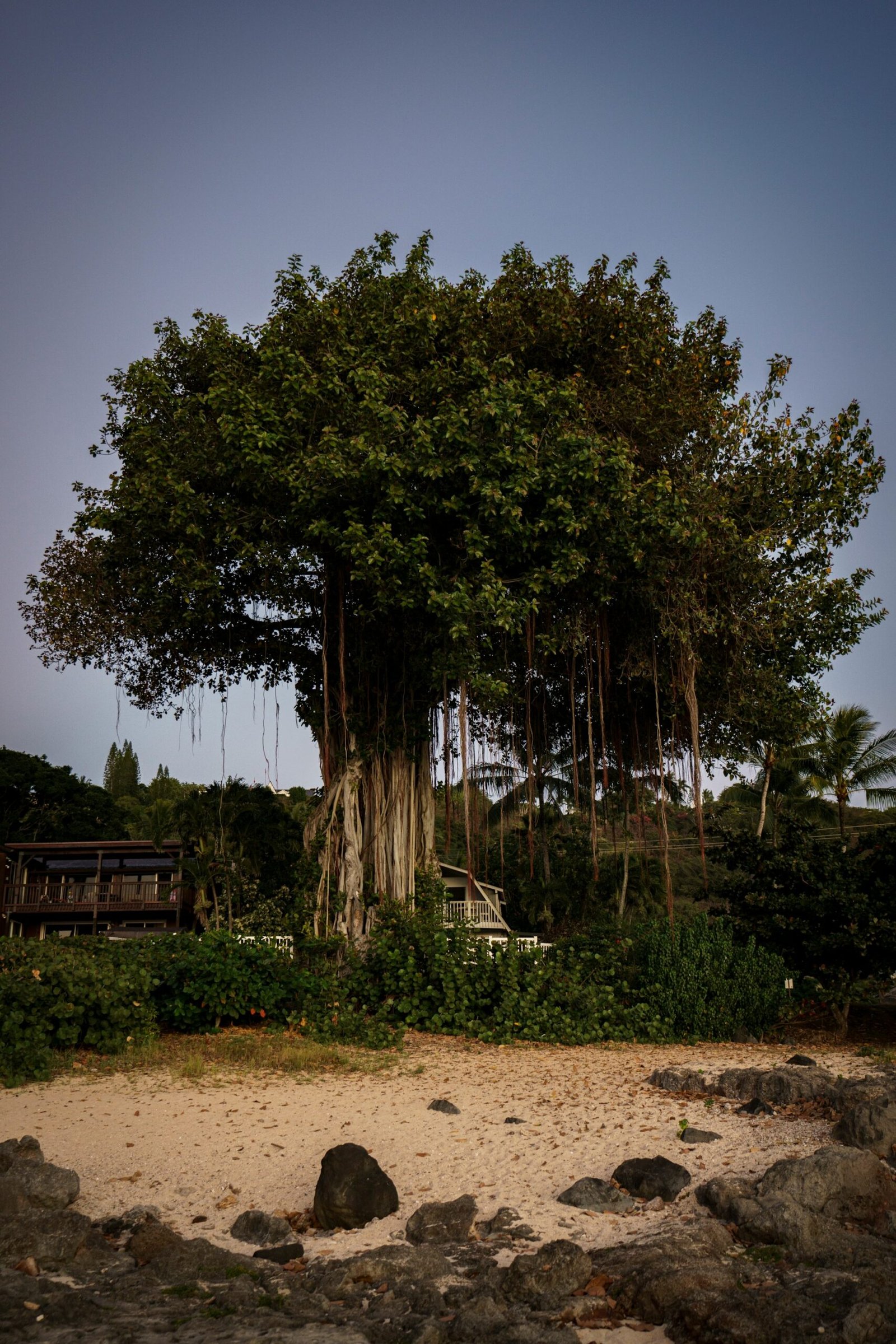
- The Banyan Tree symbolizes wisdom, tradition, shelter, and continuity.
- Silence symbolizes acceptance, spiritual peace, and the end of artistic creation.
4. Gentle Humour
Like many of Narayan’s works, the story contains subtle humour arising from ordinary village life.
5. Philosophical Tone
The story reflects on creativity, faith, aging, and the purpose of art without becoming overly complex.
6. Descriptive Narrative
Narayan vividly describes the peaceful village atmosphere and the relationship between Nambi and his audience.
Literary Devices used in R.K. Narayan’s Under the Banyan Tree – Summary
- Symbolism: The banyan tree represents tradition, knowledge, and community.
- Irony: The greatest storyteller becomes silent when his inspiration leaves him.
- Imagery: Descriptions of the village and the gatherings under the tree create vivid visual scenes.
- Contrast: Nambi’s lively storytelling is contrasted with his final silence.
Setting
- A quiet South Indian village.
- Most of the action takes place beneath the banyan tree, the gathering place for storytelling.
Message of the Story
The story teaches that:
- True talent should be accompanied by humility.
- Creativity cannot always be controlled by human effort.
- Aging and change are natural parts of life.
- Honesty is more valuable than pretending to possess abilities one no longer has.
- Spiritual acceptance brings inner peace.
Important Examination Points
Character Sketch of Nambi (30–40 words)
Nambi is a humble, honest, and deeply spiritual storyteller who believes his talent comes from the goddess. He accepts the loss of his creative gift with dignity, showing wisdom, integrity, and complete faith.
Why is the Banyan Tree Important?
- It serves as the gathering place for the village community.
- It symbolizes tradition, wisdom, protection, and cultural continuity.
- It reflects the enduring power of storytelling and shared heritage.
Why Does Nambi Stop Telling Stories?
Nambi believes the goddess has withdrawn her gift of storytelling. Rather than inventing stories or misleading his audience, he truthfully accepts the loss of inspiration and retires from storytelling.
Conclusion
R.K. Narayan’s Under the Banyan Tree is a touching story about faith, humility, creativity, and the graceful acceptance of life’s inevitable changes.